Giving Space for ‘Reactive’ Dogs: Is It Avoidance? No, It’s Essential for Learning
When walking a dog with big reactions, it can sometimes feel like you’re constantly planning your route to avoid potential triggers. But isn't this just avoiding the issue? NO!! The reality is far from it. Giving space isn’t about avoidance—it’s about creating an environment where your dog can learn and thrive without being pushed past their limits.
Why Space Matters
Dogs that react do so because they are overwhelmed. A reactive response isn’t a sign of stubbornness or defiance; it’s an emotional reaction driven by stress or fear, a sign that the dog is struggling.
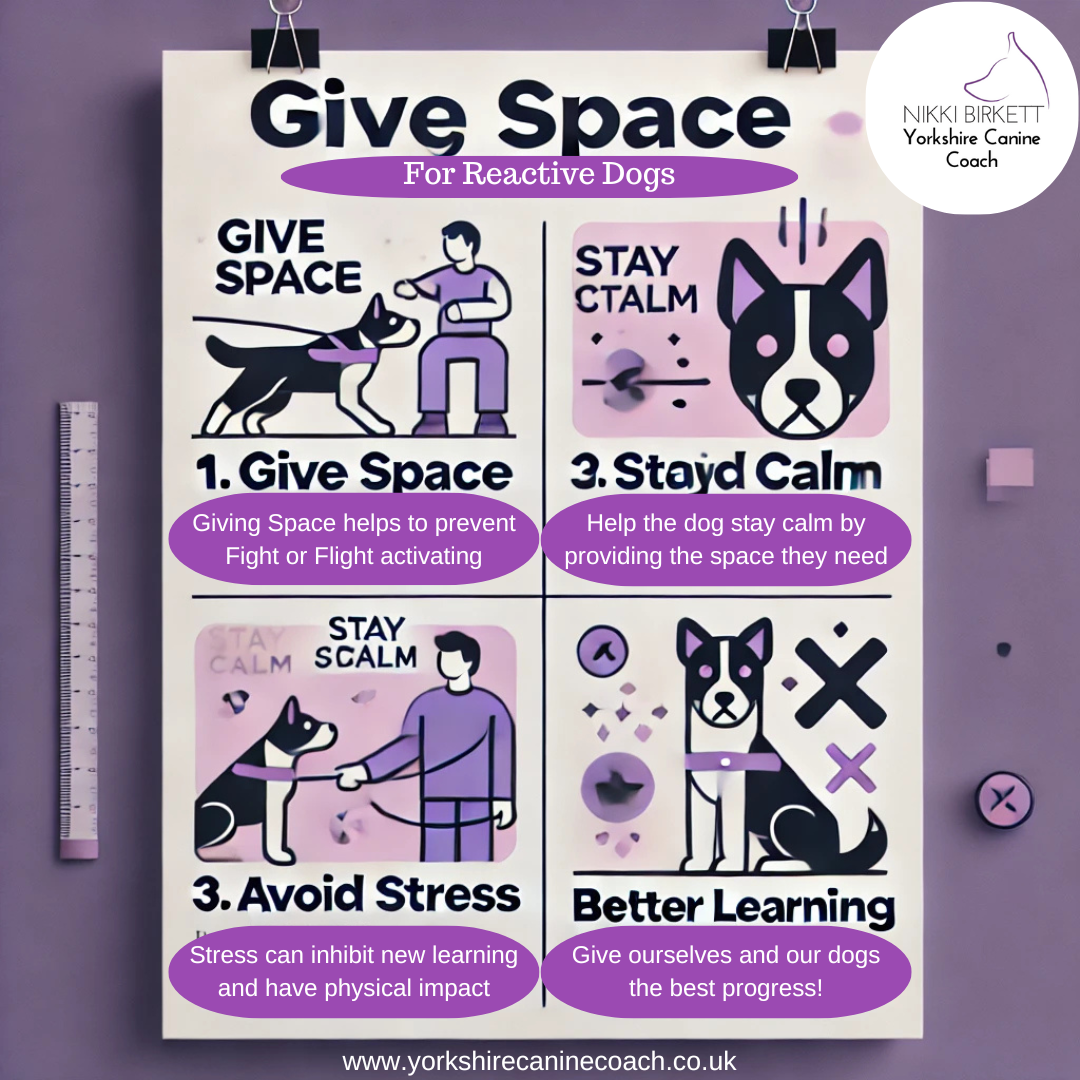
By providing space, you’re not rewarding the reaction—you’re preventing your dog from reaching a point of distress where they can no longer learn.
Every dog has their own unique threshold, the point at which they can no longer remain calm and begin to react. If your dog reaches their threshold, they are not in a state to process new information (the things we are trying to teach them). Instead, their nervous system is focused on survival.
Avoiding the Tipping Point
A reactive outburst isn’t just a momentary struggle—it can be a major setback in your dog’s progress. Each time your dog experiences a trigger and reacts, the behaviour is rehearsed, making it more likely to happen again. In addition to this, their stress levels can remain elevated for hours or even days, making future reactions even more likely in the next few days.
By giving space, you allow your dog to stay within their comfort zone, setting them up for success rather than repeated failures. Over time, as your dog builds confidence and learns better coping strategies, their threshold can shift, and their ability to handle triggers can improve.
What Giving Space Looks Like
-
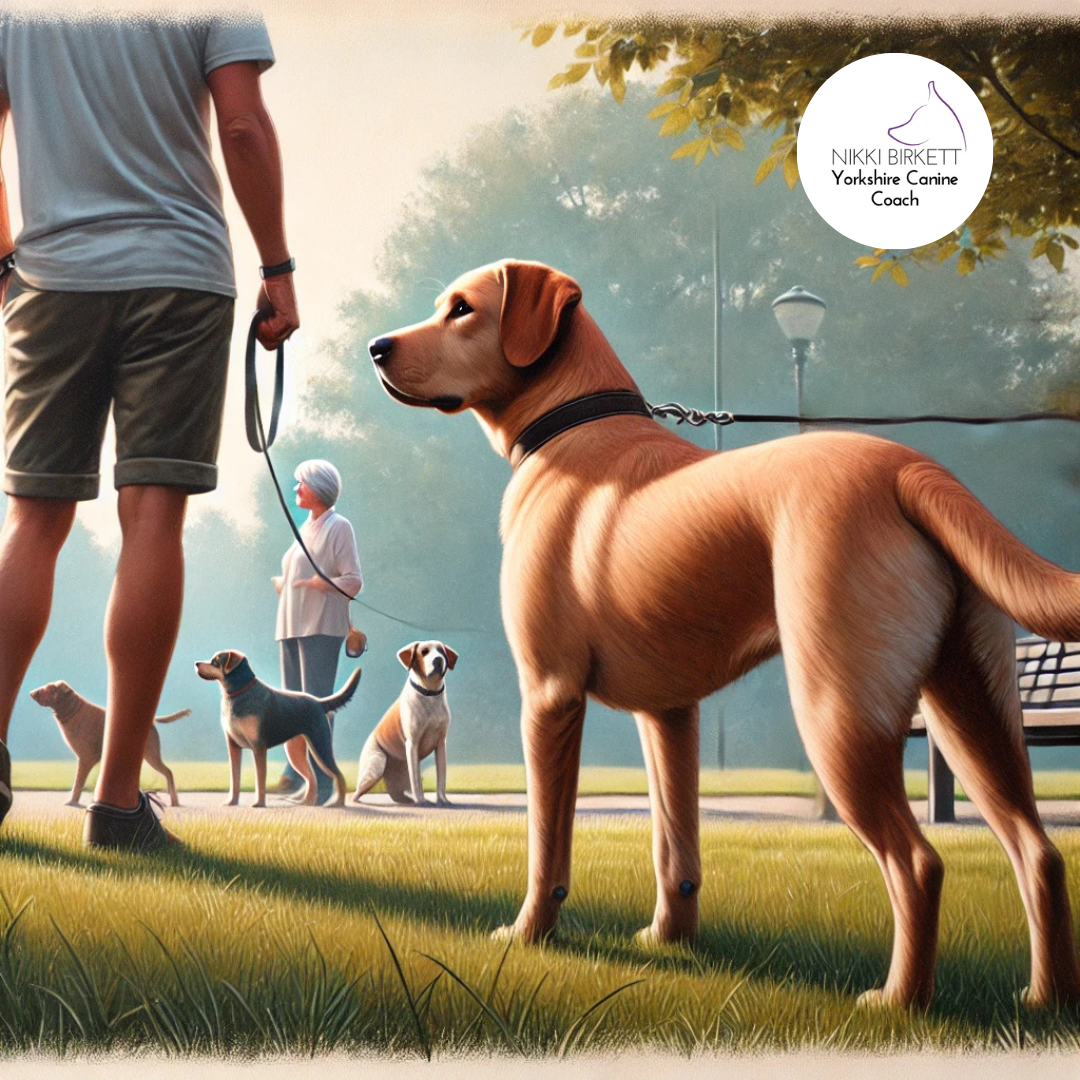
Crossing the street: If you see another dog or a trigger approaching, creating distance can prevent an unnecessary reaction.
-
Changing direction: Sometimes, the best option is simply to turn around or take a different path.
-
Using barriers: Parked cars, hedges, or other obstacles can provide a visual break that helps keep your dog calm.
-
Waiting it out: If the trigger is passing, pausing at a safe distance can allow your dog to observe without feeling overwhelmed.
Depending on the dog and the scenario, the question of whether to stand still or keep moving is has an individual answer. As part of you behavioural programme I work with you to help you identify the best for your dog in each scenario.
Final Thoughts
Rather than seeing space as avoidance, we should recognise it as an essential tool that enables learning and prevents escalation. If your dog is reactive, you’re not failing them by crossing the street or turning away from a trigger—you’re setting them up for success and ensuring their well-being.
Reactivity is not a simple fix, and every dog progresses at their own pace. But one thing remains true: the next reaction could be the tipping point. By giving your dog space, you are making a proactive choice that prevents unnecessary stress and fosters long-term progress.
So, the next time someone suggests that you’re avoiding the issue, remember this: giving space is not avoidance. It is a necessary part of the learning process, and it is one of the kindest things you can do for your reactive dog.